
Introduction
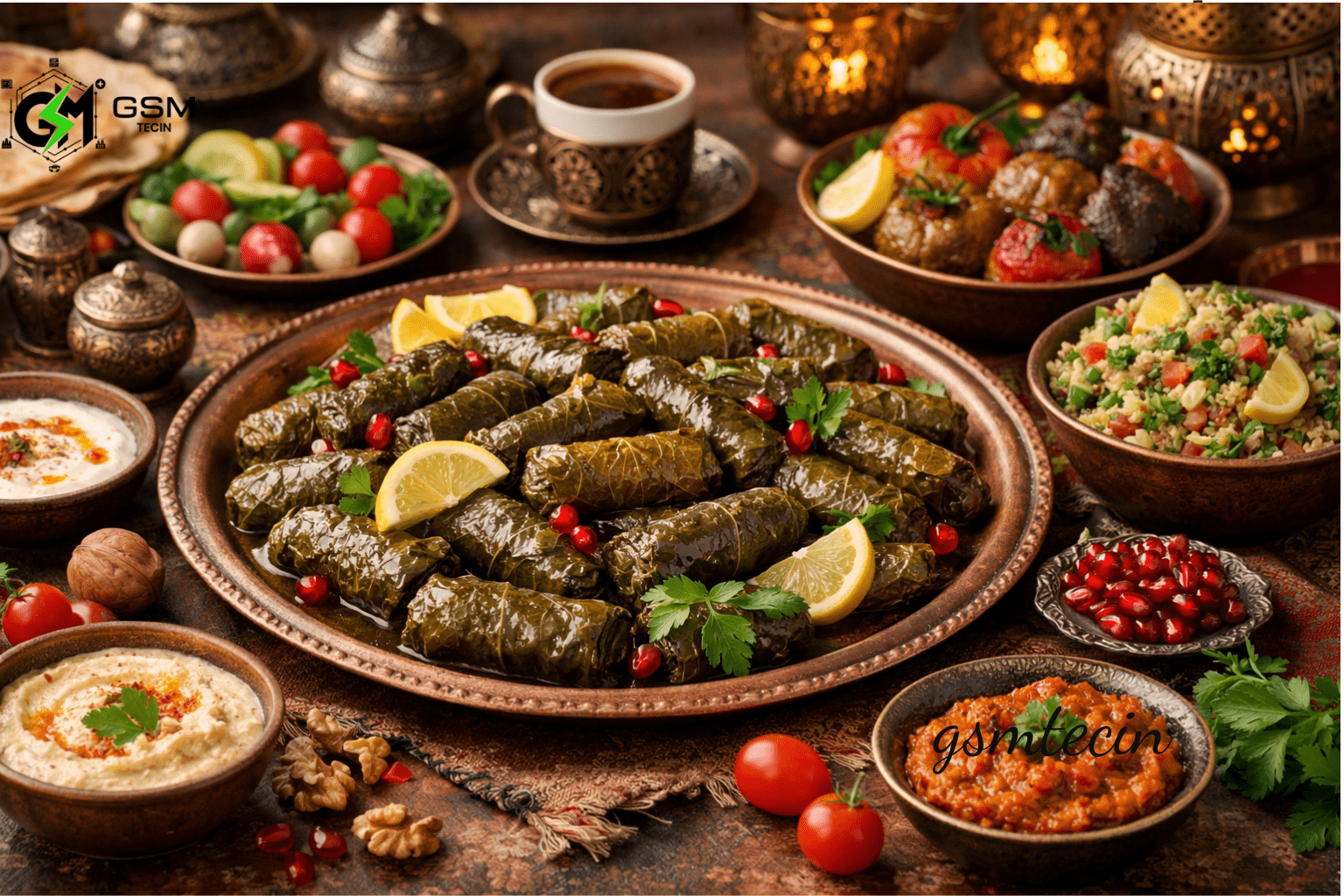
The dish known as dolma has become a global favorite because people from different cultures and countries and religious traditions have adopted it as their preferred dish to serve guests. The Mediterranean region and Middle Eastern countries and Eastern European nations and South Asian cultures all share this complex dish which cooks prepare by wrapping or rolling or filling their ingredients. The basic nature of dolma stays unchanged because different recipes use various ingredients to stuff vegetables or leaves with a special rice and meat and herb and spice mixture.
What Is Dolma?
The Turkish word “dolma” originates from the verb “dolmak” which translates to “to fill” or “to stuff.” At its core, dolma refers to a broad family of dishes in which grape leaves or hollowed vegetables such as peppers, zucchini, eggplants and tomatoes are filled and then cooked or served.
In many households, families prepare dolma together as part of a shared tradition. Families gather around tables to prepare leaves, mix fillings and roll each piece by hand. Because of the time and effort involved, dolma is often reserved for religious holidays, festive occasions and large family gatherings.
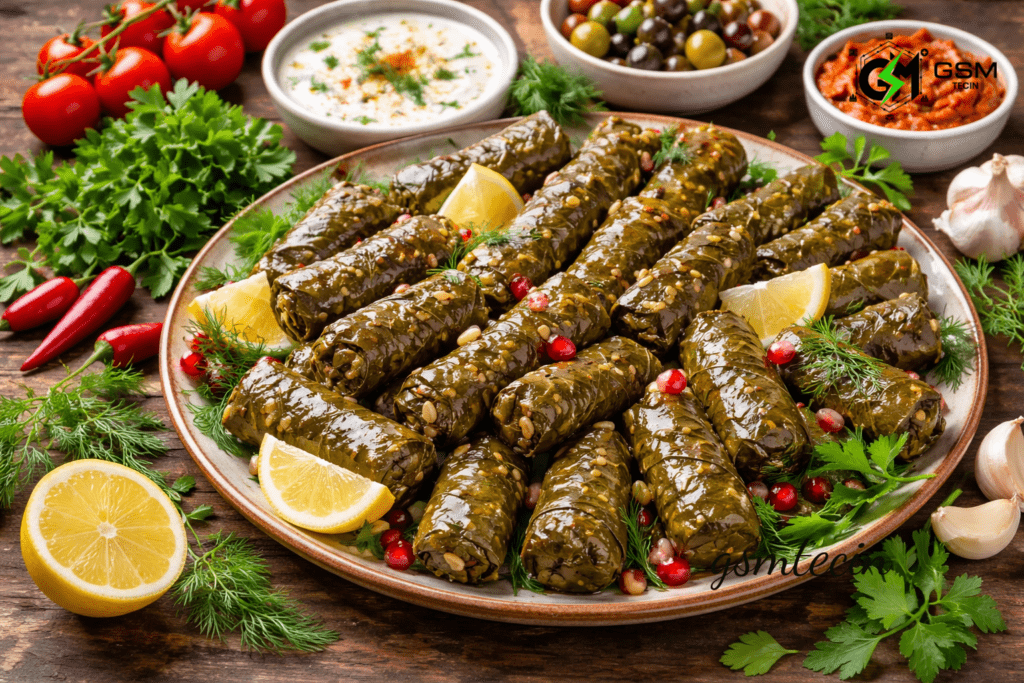
A vibrant platter of stuffed grape leaves with lemon, herbs, olives, dips, and fresh vegetables on a rustic wooden table.
Origins in the Ottoman Empire
Food historians trace dolma’s popularisation to the kitchens of the Ottoman Empire. The Ottomans developed stuffing techniques to higher levels of sophistication during the period from the 15th century until the 19th century. Palace chefs experimented with stuffing everything from vine leaves and onions to lamb, fish and even fruits.
Religious practices played a significant role in shaping dolma’s evolution. The empire contained substantial Christian populations who engaged in extended fasting traditions that prohibited them from eating animal products. Cooks invented innovative vegetarian stuffed recipes which combined rice with different herbs and spices.
The empire’s extensive territory enabled new developments to take place. The empire stretched over European lands and African territories and Middle Eastern regions, which created connections between multiple farming areas. Istanbul kitchens received ingredients from various regions, which historians call a “creative explosion” that generated numerous dolma recipes. By the 17th century, dolma had become prestigious enough for wealthy officials to employ specialist dolma cooks.
How Dolma Spread Across the World
The process of dolma dissemination started when Ottoman Empire territories began to expand and then the empire later collapsed. Stuffed grape leaves became known as waraq enab in the Gulf, dolmades in Greece and yarpaq dolması in Azerbaijan. The people of the Levant and Egypt use the term mahshi to describe their traditional practice of preparing stuffed vegetables.
People in cold areas who lacked access to vine leaves started using cabbage as their main wrapping material. This created the Bulgarian dish sarmi and the Polish dish gołąbki which became popular in these two countries.
The most unexpected path for dolma reached Sweden. King Charles XII spent his entire life in Ottoman exile after he lost the 1709 Battle of Poltava. Swedish chefs transformed the concept of stuffed cabbage into kåldolmar which they sweetened by adding syrup and they served it with lingonberry sauce.
Dolma made its way to India when it spread eastward. The 16th century Armenian merchants who traveled to Bengal brought with them the practice of preparing stuffed vegetables. Local cooks transformed it into potoler dolma which consists of pointed gourd stuffed with fish and prawns and potatoes or cottage cheese and cooked in a fragrant curry. The dish continues to hold special meaning for people who celebrate Durga Puja.
A Dish for Celebrations
The dish known as dolma maintains its festive character because it unites people through all of its historical development. The rice which used to be a precious item established dolma as a dish that showed both wealth and special times. The dish became an essential part of festive dining which people used to celebrate both Ramadan and Eid.
The Turkish people and Middle Easterners commonly serve waraq enab at their iftar meals. People in Kurdistan use yaprakh as a main dish during their Newroz celebrations. Bulgarians prepare sarmi for Christmas Eve and New Year’s celebrations. Swedish people eat kåldolmar during their daytime family meals. The dish dolma represents different cultures because it shows people who want to share their hospitality to others.
The Importance of Communal Cooking
The cultural value of dolma preparation grows because of its time-consuming cooking requirements. The process of making dolma involves multiple steps which include preparing leaves and hollowing vegetables and mixing fillings and rolling each piece. Families use task division to create moments of conversation which help them bond with each other.
The communal practice of making dolma in Azerbaijan has received recognition from UNESCO because it serves as an Intangible Cultural Heritage which helps maintain the country’s cultural heritage.
A Dish Filled with Memory and Meaning
Memories and significance exist in everything that fills this dish. The emotional connection to dolma goes beyond its basic ingredients because people use it to remember their past relationships with their grandparents and their childhood experiences at holiday meals. The dish brings back memories of home and family for people who taste it through three different versions: a grandmother’s potoler dolma from Kolkata and an Istanbul family recipe and Swedish kåldolmar from holiday dinners.
Conclusion
Dolma has maintained its global presence for over 300 years because it continuously adapts to different cultures. Its message remains unchanged despite changes in its ingredients and cooking methods and its various designations. Dolma shows affection for others and brings people together to celebrate special occasions. The dish creates a warm atmosphere of hospitality and affection for all who attend Ramadan iftar and Christmas dinner and family reunions.