Quantum Computing: A New Era of Technological Innovation
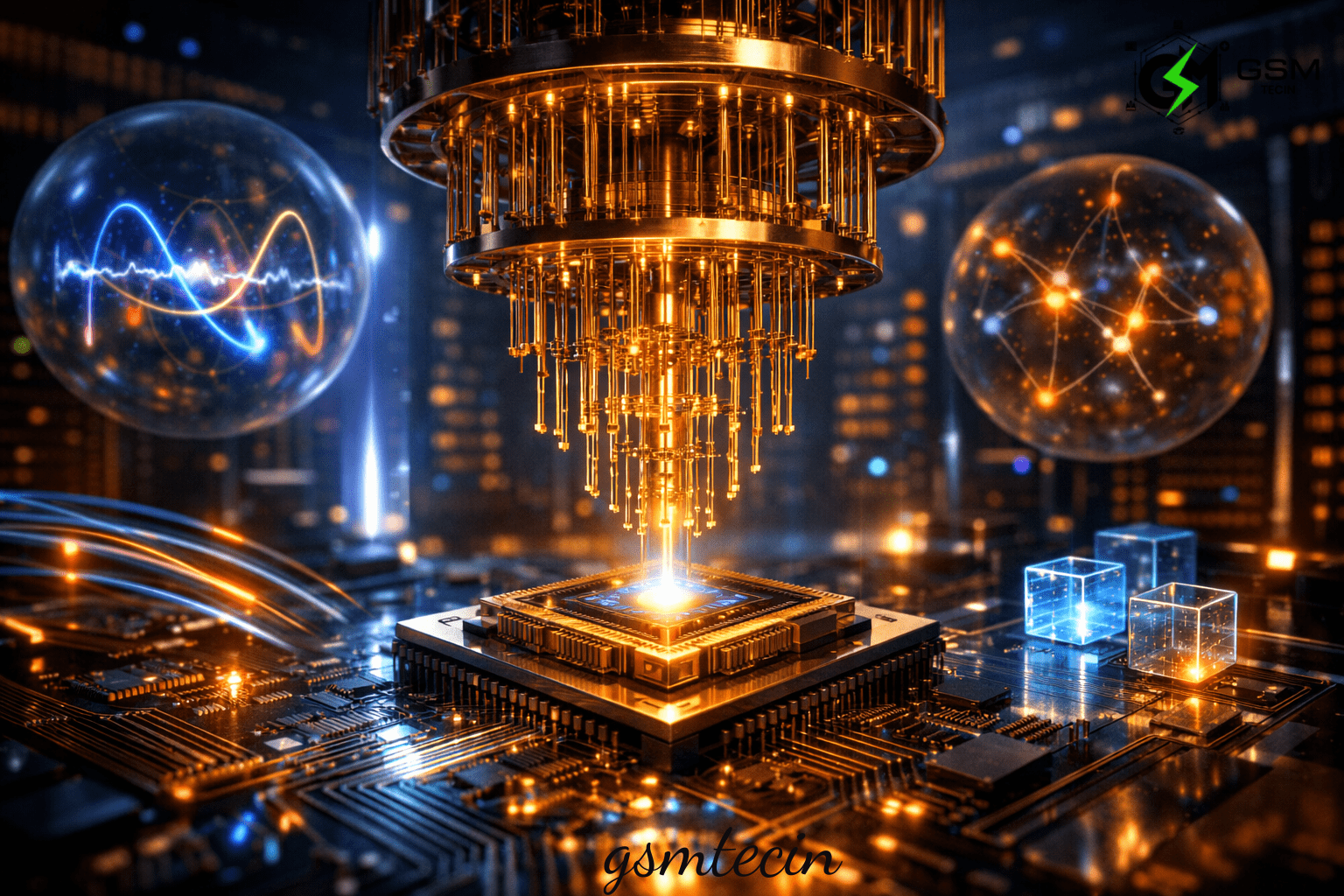
Quantum computing is rapidly turning into one of the main, if not the very main, technologies in the 21st century. Classical systems have almost exhausted their capabilities, whereas quantum computers based on Quantum Mechanics will be able to perform very complicated tasks unachievable even by most powerful classical computers in the world. They are fundamentally different from regular bits in that they can be in multiple states at the same time. This property of quantum superposition allows qubits to be capable of different states at the same time. Through the entanglement process, the qubits get connected, and they remain connected even when physically separate. upsurge, and it seems that the quantum era has begun.
What is Quantum Computing?
process, the qubits get connected, and they remain connected even when physically separate. Exploiting these aspects, the computing system is able to operate in a parallel nature on an extensive scale, thereby leading to an ability of exponential growth in power for specific tasks.
Why Quantum Computing Matters
Quantum computing has the ability to change the way various sectors operate completely, some of these sectors are:
Using quantum computing, it would be possible to perform highly complicated tasks/operations efficiently and quickly like molecular modeling which may take years if attempted to be done on classical systems.
Key Breakthroughs in Quantum Computing
1. Quantum Supremacy
Google showed that their quantum chip could outperform a classical one in a matter of seconds solving a problem that top supercomputers would need thousands of years to complete. Quantum supremacy refers to the moment when a quantum computer can do a job that the best classical computers wouldn’t be able to do in a reasonable amount of time. This is the first time a quantum processor has done that.
Such a feat backed the fact that quantum computing is more than just a concept, but something that can really be put into practice.
2. Improved Qubit Stability
Changes made to qubit designs and lessening of coherence time durations have led to less sensitivity of qubits to environmental fluctuations.
Such developments have brought about quantum systems to be able to operate with increased reliability and be scaled up more easily.
3. Quantum Error Correction
Improvements in error correction techniques have greatly enhanced the precision of systems. Top-tier scientists and technologists are of the opinion that quantum computing is no longer a difficult scientific issue.
Rather, it is an engineering problem, and this has allowed for speedier progress.
4. Hardware Innovation
Several hardware methods are developing in parallel: Superconducting qubits Trapped ions
Photonic systems Topological qubits This variety is helping the technology advance at a very rapid pace.
5. Quantum Algorithms
New opportunities in cryptography, search, and optimisation are being made possible by algorithms such as Shor’s and Grover’s. Their practical utility is growing as a result of ongoing development.
6. Cloud-Based Quantum Access
Quantum computing is now reachable through cloud platforms, hence allowing developers and researchers globally to make simulations without necessarily buying the costly equipment.
7. Quantum + AI Integration
Major players in the tech world such as NVIDIA integrate quantum computing and AI so that machine learning and optimization can be greatly improved by these powerful hybrid systems.
Real-World Applications
Quantum computing begins to reveal real-life benefits:
Healthcare: Speedier drug discovery and tailored medicine
Climate Science: Enhanced environmental modeling
Finance: Heightened risk analysis and forecasting of stock trades
Cybersecurity: Creation of quantum-resistant encryption methods
Logistics: More efficient supply chains and scheduling
Some big names such as HSBC and BMW have already started to test these applications.
Industry Growth and Investment
Quantum computing has attracted a huge amounts of investment:
The rise in investment is a clear indication that the industry is beginning to trust in the commercial potential of the technology in the short term.
Major 2025 Breakthrough Highlights
1. Advanced Quantum Systems
Quantinuum introduced the Helios quantum computer with top-notch performance and focus on practical business applications.
2. Commercial Use Cases
Companies have resorted to quantum systems to:
Forecast the behavior of financial markets
Carry out engineering experiments
Minimize supply chain inefficiencies
3. Error Correction Milestones
Significant advancements from firms such as IBM, among others, have greatly increased the dependability of quantum technologies, thereby enhancing the prospects of large-scale quantum systems.
4. Quantum Advantage Expansion
Several companies have not only achieved quantum advantage but also claimed it, demonstrating the superior performance of quantum systems over classical computers in certain tasks.
5. Hardware Scaling
Record-breaking systems, including large arrays of qubits, point to very quick improvements in scalability and capability.
6. Hybrid Quantum-Classical Systems
Hybrid computing approaches that integrate classical systems with quantum processors are gradually becoming the norm in the industry for effectively addressing complicated problems.
7. Diverse Qubit Technologies
At the same time, various types of qubits – neutral atoms, photonic qubits, and superconducting circuits – are all progressing, which is leading to a surge of inventiveness.
8. Post-Quantum Cryptography
Quantum breakthroughs are forcing businesses to start using quantum-safe cryptography as the old methods might soon be unlikely to keep up and secure the communication.
9. Recognition and Scientific Impact
The 2025 Nobel Prize in Physics recognized the pioneering work on superconducting circuits which after several times, made their indispensable role in modern quantum computing indisputable.
Challenges in Quantum Computing
Despite advancements, a number of obstacles still exist:
Millions of qubit scalability
High rates of error
Costly infrastructure
Restricted broad applications
But ongoing innovation is gradually resolving these problems.
The Future of Quantum Computing
Leading experts forecast:
Commercial quantum computing applications within the next ten years
Expansion of hybrid computer systems
Innovations in the development of medicines, materials, and artificial intelligence
Development of new cybersecurity standards
Some industry bigwigs such as Jensen Huang feel that it may take several decades for the technology to mature fully, but the latest developments signal the rise of quantum computing is sooner than we anticipated.
Conclusion
Step by step, quantum computing is becoming not only a theoretical concept but a tangible reality. Accelerated technologies, a surge in funding, and business adoption of the technology have together made the technology ready to significantly transform the global industrial scene. Alongside large companies such as Google and IBM, tiny startups are also involved in taking the limits of the potential of quantum computing and turning its commercial use into a reality.
The quantum era is not a distant dream, it has actually started and it is a new level in the evolution of computers. Innovations in quantum computing and the experiments with them are not anymore confined to universities; they are being practically applied in the real world such as in financial modelling and drug discovery. Most probably, quantum computers will be the complements of classical ones rather than their replacements. This implies the rise of sophisticated hybrid machines able to address the problems that were considered insoluble up till now. The unfolding of the true power of quantum computing will be going on mainly through making large-scale quantum computers, error correction, and coming up with quantum applications. The overall effect will be a transformation of the way in which science, business, and technology are done on a global scale.