The US-India AI Partnership will create major changes in important areas of their partnership
According to Rubrik CEO Bipul Sinha the United States and India artificial intelligence partnership will deliver major benefits to multiple areas which include healthcare education job training and digital literacy.
Sinha explained that the two countries can create inclusive development and worldwide innovation through their different strengths. He described AI as the “most transformational technology in our lifetime” which produces extensive effects on people and businesses and countries.
Complementary Strengths of Two Democracies
The United States and India create a partnership because both nations possess different strengths which increase their joint power.
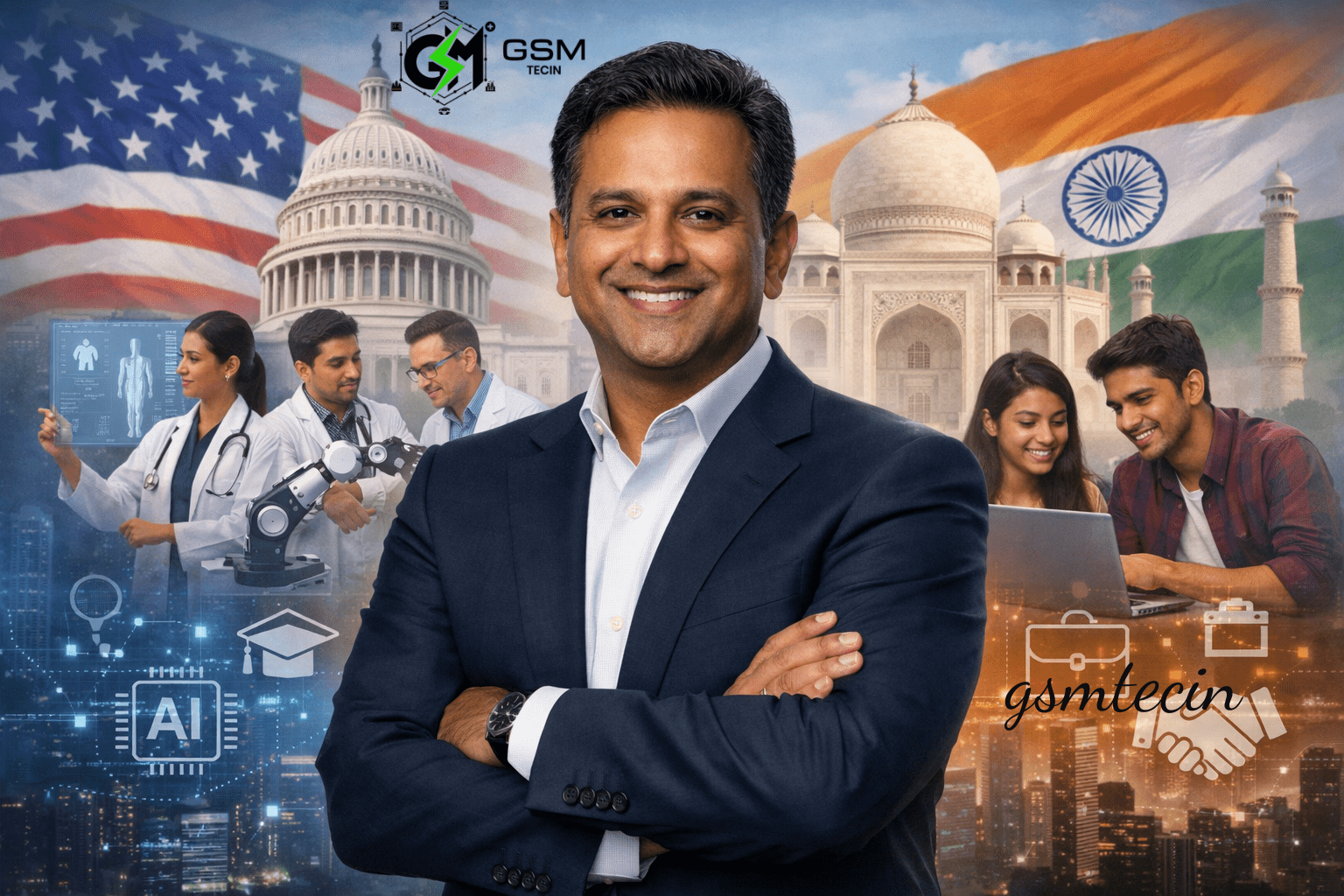
Sinha first explained that the US provides three main resources to India which include its technological expertise and its intellectual property and its complete research and development capabilities and research and development facilities. India, for its part, provides human resources through its 1.4 billion people who include a large number of young people and a fast-growing economy and its status as one of the biggest technology talent pools in the world.
The American technological leadership together with the Indian digital workforce and Indian population size create what he describes as “tremendous” business possibilities. Through AI collaboration American companies can provide their most advanced technologies to Indian businesses while Indian businesses use these technologies to create a prosperous middle class who will reach the middle class status.
He stated that artificial intelligence technology serves as the main factor which enables hundreds of millions of people to enter the middle class because it allows better access to vital services.
Healthcare: Delivering at Scale
Healthcare stands out as one of the most impactful areas of cooperation. AI-powered solutions can revolutionize diagnostic processes and enable early disease detection while supporting telemedicine services and enhancing treatment planning in the vast Indian healthcare system.
The US contributes cutting-edge research in medical AI and advanced machine learning models, while India offers vast clinical data diversity and large-scale public health infrastructure. The combined capabilities of both nations enable the development of affordable healthcare solutions which will benefit people living in remote areas and underserved regions.
Sinha observed that artificial intelligence enables healthcare organizations to provide medical services throughout remote areas that lack sufficient specialist healthcare providers. The combination of predictive analytics and AI-powered diagnostic tools improves public health management capabilities as well as disease forecasting and emergency response operations.
Education, Job Training and Digital Literacy
The two fields of education and workforce development hold equal importance. People must learn to work with evolving AI technologies because these systems change the way work gets done and which skills workers need. Sinha said AI will significantly impact job training, requiring societies to focus on reskilling and AI literacy.
AI-powered educational platforms deliver personalized learning experiences while creating educational access for students who lack quality teachers and need multi-language support in India’s various cultural backgrounds. US technology companies and Indian educational institutions should work together to create a stronger worldwide AI talent development system which will help students succeed in an AI-driven job market.
He emphasized that AI literacy and digital literacy will serve as essential factors which will enable inclusive development.
Risk and Reward in the AI Era
The AI Era brings businesses two competing forces through its combination of risk and reward. The exponential possibilities of AI systems bring benefits to businesses yet Sinha warned about their potential dangers. Organizations can achieve production advantages through AI systems yet these systems create new cybersecurity risks which threaten their security. The speaker indicated that AI systems create 100 times more business opportunities together with 100 times more operational dangers because cybercriminals can remotely access business environments.
Sinha presented AI technology as the beginning of a new industrial era at the national level. A country’s position in this emerging AI-driven world order will influence its economic and strategic standing.
Focus on Trusted ‘Agentic’ AI
Sinha will present his research during the India AI Impact Summit which marks the first major AI summit hosted in the Global South. The organization can implement agentic AI systems through large-scale deployment according to Sinha which describes acceptable risk boundaries. Rubrik’s guiding principle, “unleash agents, not risk,” reflects this balance.
He raised critical questions around monitoring AI agents, establishing governance frameworks, building guardrails and ensuring trust. Organizations need to develop systems which allow them to reverse damages caused by AI system failures and security breaches while maintaining their operation capacity.
Trust, he emphasised, is essential-especially in regions where AI will underpin healthcare, education and public services. The government and businesses need to establish methods which support transparency and accountability while implementing effective cybersecurity protection measures.
The Factory of Intelligence Project is Under Construction
Sinha defined AI infrastructure as the “new factory of intelligence” which requires both GPUs and data centres plus extensive financial resources. He acknowledged the need for substantial resources to operate such infrastructure yet he commended India for increasing its data centre capacity through tax breaks and public-private partnerships.
India has invested heavily in AI infrastructure development while the country rapidly develops its digital backbone. India uses its business process expertise together with technology services to provide worldwide AI-powered solutions.
People, Planet and Progress
The India AI Impact Summit selects its main themes from the three concepts of People, Planet and Progress. Sinha explained that these three pillars of AI research show how AI technology affects workforce changes and energy needs and helps create beneficial development.
He raised a central question: Will AI-driven progress be inclusive trustworthy and advantageous to billions of people? Society requires strong governance and ethical frameworks together with responsible innovation to ensure AI deployment creates positive social impacts.
A Defining Global Partnership
Sinha believes that a strong US-India AI partnership will determine how global technology develops. The United States and India can achieve economic growth through their joint American innovation efforts which work with Indian talent and operational capabilities to create healthcare and education and workforce development solutions.
The United States and India can establish an effective AI partnership which will determine the industrial revolution through three main principles: trust and cybersecurity resilience and responsible governance. The new industrial age will provide transformative benefits which extend to both countries and all their allies.