The Future of Agentic AI and Multimodal Systems
Artificial intelligence is going far beyond simple automation and forecast tools as a consequence of its swift progress. The next generation of intelligent machines will mainly be defined by two technological breakthroughs: multimodal AI and agentic AI. These two technologies combined can not only transform the whole set of industries but also make the way humans and computers interact more natural and lead to very efficient automated systems. As companies and scientists keep discovering and implementing these technologies, their coexistence is dictating the future of smart digital ecosystems.
Understanding Agentic AI
Agentic AI means artificial intelligence systems that have the capability to carry out a sequence of tasks on their own to reach a specific objective or deal with a certain issue. In contrast to the conventional AI that is centered around a single task like image recognition or language translation, these systems combine various functions. To accomplish challenging tasks, they combine planning, reasoning, decision-making, memory, and action execution. These AI agents can perform various activities which include: interfacing with software tools, analyzing data from multiple sources, and realigning their strategies on the basis of outcomes.
For example, an agentic AI system can organize a business trip. It can search for flights and compare hotel prices. The system can even organize meetings and plan a travel itinerary. This degree of independence signifies a radical change from the conventional AI systems. Earlier systems relied heavily on human instructions for every step. Agentic AI is therefore a digital assistant or discrete intelligent worker that is capable of completing independent complex workflows.
Understanding Multimodal AI Systems
Multimodal AI systems have the ability to process and comprehend various forms of data simultaneously. These data formats may be text images audio video charts, sensor data, and even structured information like spreadsheets.
In general, people use multiple senses at the same time to make sense of information.
For example, scans a document to get a feeling what it is about, at the same time, it may capture the comfort of its environment by hearing the voices or music around. Multimodal AI seeks to achieve the similar objective by integrating different data sources into one system.
Take an illustration of a multimodal AI assistant, it is capable of looking at an image, reading a text related to it, hearing a person’s instructions, and finally, giving a detailed answer. In such a way, these AI systems not only become more versatile but also a human-like level of understanding.
The Convergence of Agentic and Multimodal AI
The real game changer is when empowered capabilities are merged with multimodal intelligence. AI agents able to handle diverse data types and perform autonomous operations are a major step-forward compared with the previous generation of AI that could understand data from only one source.
Such AI machines may be proficient in reading and understanding text, extracting information from charts, decoding images, following voice instructions, and running various programs. This combination enables AI agents to assess complicated scenarios and take decisions based on factual knowledge at the moment.
Therefore, because of this blending of agentic AI and multimodal systems many significant breaks-through in technology can be anticipated in the near future.
Industry Applications
Healthcare
Adopting multimodal agentic AI could lead to a very major positive impact on one of the sectors especially healthcare.
There is a very high possibility that medical systems in the future will have the capability of processing different data types such as medical images, patient records, genetic information, and physician notes all at once.
Such systems are generally considered a great help for medical professionals. They can assist doctors in spotting diseases at the initial phase. At the same time, they can offer them well-tailored treatment suggestions. Plus, they may help physicians stay updated on their patients’ health status through wearable devices. Apart from that, AI can also be used for the execution of the doctors’ ordinary office tasks. Say, AI software after looking at an X-ray can figure out a patient’s symptoms by going through the medical files, and after analyzing the breathing sound of a patient from an audio recording, it can help with a more accurate diagnosis.
Autonomous Transportation
Self-driving cars depend on a variety of data inputs including cameras radar lidar sensors, and GPS. Multimodal AI is what equips vehicles with the ability to not only process but also integrate different kinds of sensory data. On the other hand, agentive AI is what enables cars to make driving decisions on their own, without human intervention.
Further progress in technology is expected to enable self-driving cars to forecast traffic fluctuations, communicate among themselves, change routes based on weather, and manage emergency situations in a very safe way.
Intelligent Personal Assistants
Digital assistants are undergoing a transformation from basic question-answering devices to large-scale task handlers. Equipped with multimodal features, tomorrow’s assistants may be able to comprehend spoken instructions, interpret pictures, handle emails, set up meetings, and even carry out online shopping activities.
It is highly probable that such aides will turn into anticipatory collaborators that support users in handling their everyday chores more smoothly.
Business Automation
Companies produce huge amounts of data like documents, customer conversations, and rich media content. Multimodal AI is able to, at the same time, work with different types of data while agentic AI is able to produce actions based on the generated insights.
These types of systems could be very helpful to business operations- besides that, the business may have the capability to automate their processes, keep track of their activities, generate reports, and even come up with scenario proposals from zero. For instance, a buying AI agent may analyze sales data, customer feedback, and social media trends to develop new marketing campaigns and match stock levels up to the point.
Education
Imagine, in the field of education, multimodal agentic AI might have a role to play in delivering really tailored learning experiences to learners. An AI tutor
could be able to not only evaluate studenttext, speech, and videos but also mapthe levels of a students learning.
Creative Industries
Creative sectors such as filmmaking gaming advertising, and design will also be able to capitalize on multimodal AI systems. Such AI can produce images videos music, and written output.
Agentic AI may help artists by automatically editing videos, coming up with storyboards, designing advertising materials, or producing immersive game settings. Instead of competing with human creativity, these tools would be human creators’ colaborative partners.
Technologies Enabling This Progress
There are a few technological innovations that are helping agentic and multimodal AI systems to develop rapidly.
Firstly, massively deep neural architectures and large language models have considerably raised the level of AI reasoning capabilities. Then, cloud-based services combined with dedicated processors like GPUs have tremendously expanded available computational power, thus making possible the training of very big models.
Another thing is that new machine learning algorithms are now capable of cross-modality alignment, i.e. associating images with texts. Besides, the use of reinforcement learning enables AI-based agents to gain knowledge through trial and error and improve their behavior gradually.
Altogether these major technologies set the stage for the creation of very advanced autonomous AI systems.
Challenges and Limitations
Even though agentic and multimodal AI systems hold great promise, they still have a very large development path to be considered full-fledged and ready for broad utilization. Data complexity and computational costs are a few of the issues that such AI systems face.
Data complexity involves multiple data types, which calls for very large datasets and very careful training processes. Big AI models need very powerful computers to run. If you want them to produce quality results, you really cannot compromise on their compute power.
Security and control are still foremost concerns when building strong AI. Developers need to exercise great care in the design of the AI so that it behaves responsibly and understands human intentions. On top of that, authorities and organizations have to address other ethical dilemmas through measures such as safeguarding privacy, detoxifying algorithms from biases, and even taking into account that some job losses may occur.
Therefore, creating the responsible form of AI is the first priority on the agenda of the researchers and the organizations. They are working on standards and guidelines to help achieve that.
Human–AI Collaboration
Instead of displacing humans, AI in the future will most likely be at enhancing human abilities.
Creators believe that agentic and multimodal systems should cooperate with people rather than functioning on their own.
People will engage in activities that require imagination and ingenuity, making long-term plans, and deciding on morals, whereas AI gadgets will be in charge of monotonous or information-intensive assignments. This partnership paradigm is probably going to be the prevailing method in a lot of sectors.
Long-Term Vision
In the long run, the merging of agentic and multimodal AI may result in very sophisticated digital ecosystems. It may become possible for chains of AI agents to work together to solve issues facing the entire industry.
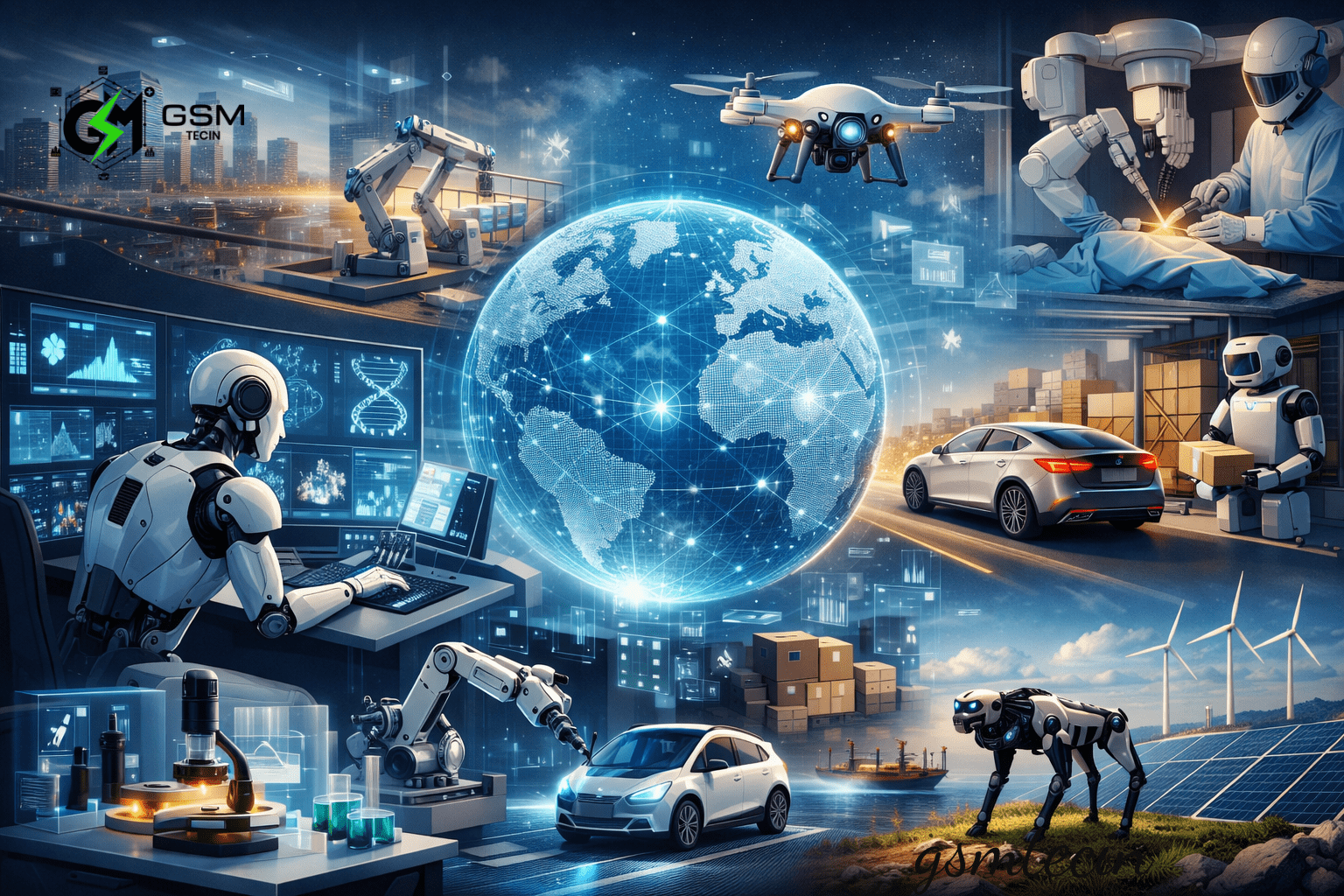
Looking ahead, autonomous AI research assistants could be one of the new innovations. Smart cities may employ AI to run public services, energy, and transport efficiently. Robots that have extremely smart features can be the ones to do manufacturing and disaster relief jobs among other things. In addition, personalized digital companions might make people’s daily life management a lot easier.
Even though these advancements might appear far-off, ongoing swift evolution in artificial intelligence indicate their realization quite possibly within the next few decades.
Conclusion
Agentic AI and multimodal systems are two key developments of the new era in artificial intelligence. The former endows machines with the power of independent decision-making and action, while the latter enables the AI to understand the environment via different types of data.
The integration of these two technologies is expected to transform the healthcare transport education industries and business operations among others. On the other hand, developers and policymakers should work on the concerns of ethics, security and data complexity.
Next-generation artificial intelligence will be made of intelligent machines that are capable of seeing, thinking, and acting in various human activities. These machines will collaborate with humans solving complex problems and opening new avenues.