

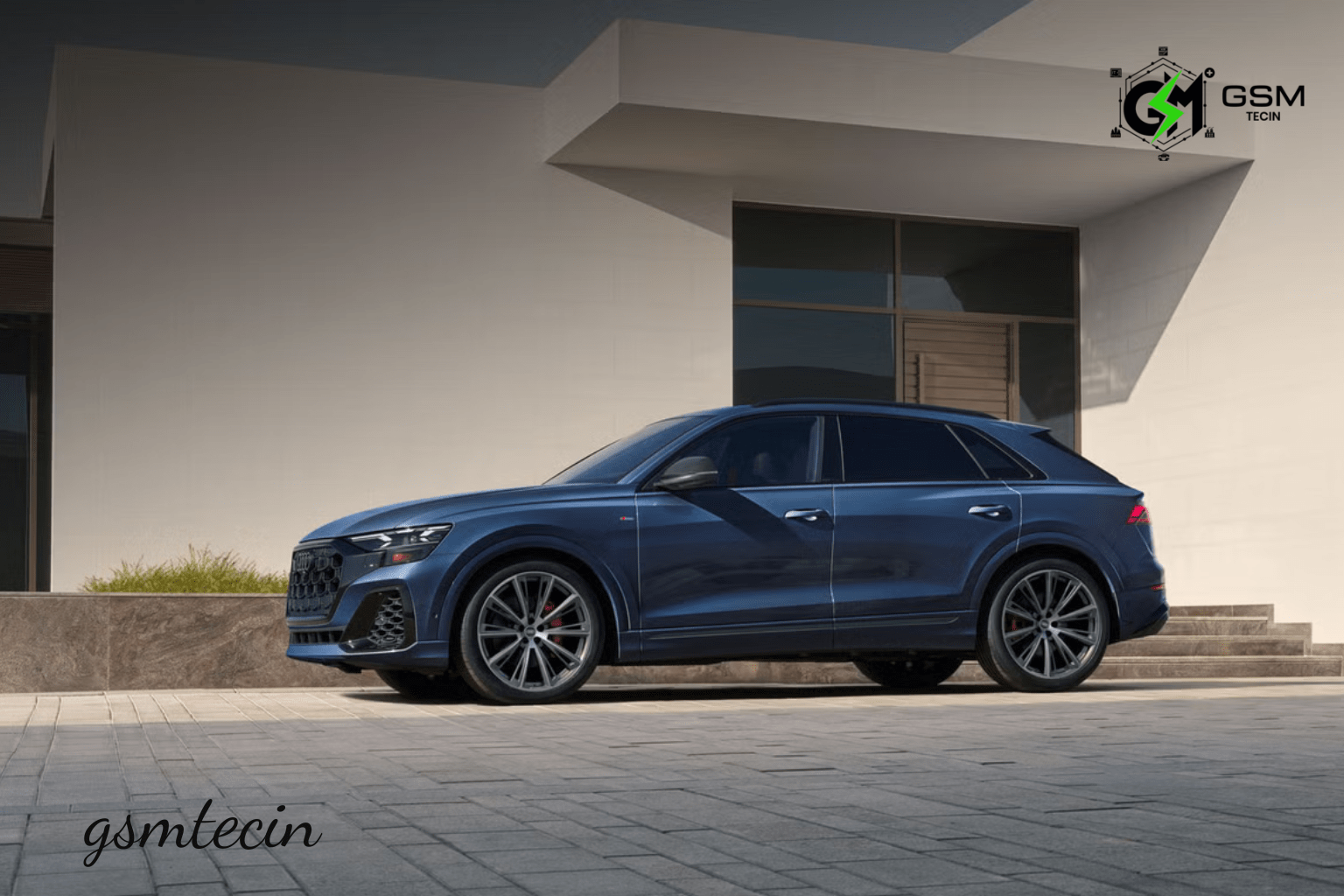
For years, Audi has watched its German rivals own one of the most lucrative segments in the American car market without so much as raising a hand to compete.
BMW has the X7. Mercedes-Benz has the GLS. Cadillac has the Escalade, a luxury SUV that has generated huge profits for General Motors for years. American buyers continue spending heavily on large, premium three-row SUVs.
Meanwhile, Audi has mostly stayed out of this segment despite its “Vorsprung durch Technik” brand identity, which means “advancement through technology.”
That changes this summer.
On May 12, 2026, today, Audi officially revealed the interior of the 2027 Q9, its biggest vehicle ever built, and the first full-size luxury SUV the brand has ever produced. The full exterior reveal is set for July 29, 2026, with US sales expected to follow later this year. Journalists from CarBuzz, Motor1, Jalopnik, and Autoblog were flown to Munich, Germany for an exclusive interior preview, and the details that came out of that room are genuinely impressive.
This is not Audi padding out the Q7 and slapping a new badge on it. The Q9 is a statement, a deliberate, carefully engineered attempt to walk into the most competitive segment in American luxury automotive and plant its flag.
Why America, and Why Now?
Audi CEO Gernot Döllner made the brand’s intentions clear at the Audi Annual Press Conference 2026 on March 17: “Later this year, the Audi Q9 will follow as the new flagship of the Audi portfolio and the first Audi in this segment. And this is a particularly important model for the United States.”
That directness is telling. US sales for Audi have been under real pressure 2026 has been described by Autoblog as “difficult so far” and the brand knows it needs something substantial to bring buyers back into showrooms. The full-size, three-row luxury SUV is the answer. It’s the segment that refuses to slow down regardless of economic conditions, fuel prices, or how many times automotive journalists declare the death of the large SUV. Americans keep buying them.
The Q9 is also arriving at an interesting competitive moment. The BMW X7, the Q9’s most direct rival, is approaching the end of its current generation and due for a full redesign. Mercedes just gave the GLS a facelift rather than a ground-up rethink. Audi is entering fresh, with new architecture, new technology, and critically an interior brief that was written with North American buyers specifically in mind.
The Q9 uses the largest version of Volkswagen Group’s PPC (Premium Platform Combustion) architecture. It shares the platform with the new Q5 but uses a much longer layout.
The SUV is expected to measure around 205 inches in length, making it noticeably larger than the Q7. It will offer three full seating rows and a spacious cabin design. According to Top Electric SUV, folding the rear seats creates a “lounge-like” floor space.That is a direct play for the cargo-hauling, road-trip family market that the Escalade has owned for two decades.
The Interior: Where Q9 Made Its Boldest Moves
Every journalist who sat inside the Q9 in Munich came back with the same immediate reaction: this raises the bar for Audi interiors, and possibly for the segment.
Let’s start with the doors, because they’re the first thing you interact with, and Audi made them unlike anything the brand has offered before.
For the first time in Audi’s history, the Q9 features power-operated doors that both open and close automatically. Pull the exterior handle once and release it, the door swings open by itself, up to 90 degrees. Buckle your seatbelt, press the brake pedal, or hit the button on the inner door panel, and it closes on its own. External radar sensors detect obstacles, trees, road signs, cyclists, approaching traffic and will stop the door from opening too wide or at all if something is in the way. You can also open and close all four doors simultaneously via the key fob or the myAudi app. It is, as Jalopnik noted, “simultaneously a gimmick and quite nice” — which is exactly the right description for a feature that belongs on a flagship luxury vehicle.
Interestingly, the Q9 does have traditional physical door handles on the outside, which was a relatively last-minute decision made personally by Audi’s CEO. Anyone who has experienced the frustrating flush-handle arrangements on certain competitors will understand the appeal of that choice.
Three Rows Built For Adults, Not Just Children
The Q9 offers either six or seven seats, and buyers can configure it either way. Choose six and you get captain’s chairs in the second row individually, power-adjustable seats with ventilation and generous padded armrests plus two seats in the third row. Choose seven and the second row becomes a full bench, all three positions of which can accommodate child seats.
Either way, power adjustment is standard throughout. The third-row seats can raise or lower independently with the touch of a button. Controls are accessible from inside the trunk, making cargo loading much easier.
Second-row captain’s chair models also include a center pass-through to the third row. That means passengers can access the back seats without adjusting or disturbing row two.
CarBuzz described the third row as “slightly more cramped than an Escalade but vastly more spacious than a Volvo XC90.” Motor1’s reviewer, standing 6-foot-1, called it “roughly on par with what you’ll find in the X7, more than good enough for kids and adults on shorter journeys.” For a first attempt at this segment, those are strong benchmarks to hit.
The panoramic sunroof runs across the full length of the cabin and comes standard on all trims. Step up to the premium option, and individual panels can be switched between transparent and opaque on demand the same electrochromic glass technology used on the Porsche Taycan, now available in a family hauler.
Technology and Ambiance: Q9 Goes All In
The dashboard layout will feel familiar to anyone who has spent time in a recent Audi, but it has been scaled up, refined, and stripped of several of the criticisms that followed earlier versions of the brand’s interior design language. Notably and this is bigger news than it sounds Audi has cut back on piano black trim. Anyone who has spent five minutes trying to keep a piano black dashboard clean in direct sunlight will receive that news with genuine relief.
The three-screen setup includes the driver’s display, the central MMI infotainment screen, and an optional passenger screen. Dual wireless phone chargers are standard. Four-zone climate control covers all three rows. Heated and ventilated seats are available for both first and second row occupants.
The audio system is where things get genuinely indulgent. The Q9 gets a Bang & Olufsen premium sound system with 22 speakers and higher-end trims add something Audi calls a 4D audio experience, which uses actuators built into the front seats to deliver physical vibrations that sync with the music. Jalopnik described it as “a bit of a gimmick, but for the sort of money you’re gonna shell out for a Q9, gimmicks are welcome.”
The ambient lighting is comprehensive to a degree that is almost difficult to fully communicate. It is standard on the dashboard and front doors, optional for the rear. The panoramic roof adds an LED ring of 84 lights that can illuminate in any of 30 colors, synced to the cabin’s ambient scheme. Even the first and second row captain’s chairs have ambient lighting built into them. There is also what Audi calls a Dynamic Interaction Light running along the base of the windshield — a thin strip of lighting that responds to driver inputs and vehicle events. It is, depending on your perspective, either the most over-the-top lighting package in the segment or a masterclass in atmosphere-building. Probably both.
The Competition It’s Coming For
Audi has been explicit about its targets. The Q9 is going after the BMW X7, the Mercedes-Benz GLS, and most ambitiously – the Cadillac Escalade, which has been the defining benchmark of American full-size luxury for years.
That is a genuinely ambitious target list. The Escalade is a cultural institution in the United States; it is not just a vehicle, it is a status symbol with decades of brand equity behind it. The GLS is a benchmark in European luxury at American scale. The X7 is BMW’s most polished three-row attempt yet. Audi has never played in this space before.
What the Q9 has going for it is timing, technology, and a design focused on American buyers instead of European priorities. Features like automatic doors, an adult-friendly third row, and 4D audio were built with family travel in mind.
The configurable six or seven-seat layouts target buyers who spend long hours on highways and expect a premium experience. From opening the door to reaching the destination, Audi wants every interaction with the Q9 to feel upscale.
Audi has not fully confirmed the powertrain lineup yet. The Q9 is expected to launch with a 3.0-litre turbocharged petrol engine paired with mild-hybrid technology. A plug-in hybrid version could arrive later. Reports also suggest a high-performance model using a 4.0-litre twin-turbo V8, the same engine used in the Audi SQ7 and Audi SQ8. Neither a fully electric version nor a diesel is expected for the North American market at launch.
Conclusion:
The 2027 Audi Q9 is one of the most strategically important vehicles the brand has ever built. It represents Audi’s first real attempt to claim a piece of the full-size American luxury SUV market — a segment worth billions of dollars annually and growing — with a product that was engineered from the ground up to meet what that market actually demands.
The interior preview that landed today makes a compelling case. Automatic doors. An adult-ready third row. 22-speaker 4D audio. A panoramic roof that goes opaque on command. Ambient lighting on the captain’s chairs. A brief that reads less like “European luxury exported to America” and more like “American expectations met with German precision.”
The full reveal comes July 29. US sales follow before the end of 2026. Whether the Q9 can actually steal meaningful ground from the Escalade, the GLS, and the X7 remains the open question but based on what Audi showed the world today, the fight is on.
References
- CarBuzz — “Audi’s Biggest Model Ever Has An Interior Designed To Conquer America” (May 12, 2026) — https://carbuzz.com/2027-audi-q9-interior-preview/
- Motor1 — “2027 Audi Q9 Interior: First Look” (May 12, 2026) — https://www.motor1.com/features/795499/2027-audi-q9-interior-first-look/
https://www.jalopnik.com/2170297/2027-audi-q9-interior-preview-three-row-flagship-suv/ - Autoblog — “This is Your First Official Look at the 2027 Audi Q9” (May 12, 2026) — https://www.autoblog.com/news/this-is-your-first-official-look-at-the-2027-audi-q9
- BMWBLOG — “Audi Q9 Interior Revealed: BMW X7 Rival Gets Automatic Doors” (May 11, 2026) — https://www.bmwblog.com/2026/05/11/2027-audi-q9-interior-revealed/
- Top Electric SUV — “Audi Q9 launches summer 2026, eyes U.S. & Canada family SUV buyers” (May 9, 2026) — https://topelectricsuv.com/news/audi/audi-q9-update/
- ZigWheels — “2026 Audi Q9 Interior Revealed: Specifications, Features, Upholstery And Other Details” (May 12, 2026) — https://www.zigwheels.com/news-features/general-news/2026-audi-q9-interior-revealed
- Motor1 — “Audi Has 7 New Models Coming In 2026. Here’s All Of Them” (May 9, 2026) — https://www.motor1.com/news/795224/new-audi-models-2026/
- Audi Annual Press Conference 2026 — CEO Gernot Döllner remarks on Q9, March 17, 2026 (cited in Top Electric SUV reporting)
- Audi Report — Combined Annual and Sustainability Report 2025 (published March 17, 2026, cited in Top Electric SUV)
FAQs
Q1: What is the 2027 Audi Q9 and why is it significant?
The 2027 Audi Q9 is Audi’s first ever full-size, three-row luxury SUV — the largest vehicle the brand has ever produced. The Q9 is important because it marks Audi’s direct entry into America’s most competitive luxury SUV segment. It will compete against vehicles like the BMW X7, Mercedes-Benz GLS, and Cadillac Escalade.
Audi CEO Gernot Döllner called it “a particularly important model for the United States” during the brand’s 2026 Annual Press Conference.
Q3: What are the most notable interior features of the Audi Q9?
The Q9’s standout feature is its automatic power doors — a first for Audi. Drivers can open or close them using the door handle, key fob, myAudi app, or brake pedal. Built-in radar sensors also help detect nearby obstacles.
Other highlights include a 22-speaker Bang & Olufsen sound system with 4D seat actuators and a panoramic sunroof with electrochromic panels. Buyers can choose six or seven-seat layouts with power adjustment throughout the cabin. The SUV also includes four-zone climate control, a three-screen cockpit, dual wireless charging, and ambient lighting with 30-color LED options built into the panoramic roof.
Q4: How does the Audi Q9 compare to the BMW X7 and Mercedes-Benz GLS?
Based on the interior preview, the Q9’s third row is described as comparable to the BMW X7 in space — more usable than most competitors at this size. Its automatic door system and 4D audio are differentiating features neither rival currently offers. The BMW X7 is approaching the end of its current generation, and the GLS recently received a facelift rather than a full redesign, giving the Q9 a timing advantage as the freshest product in the segment.