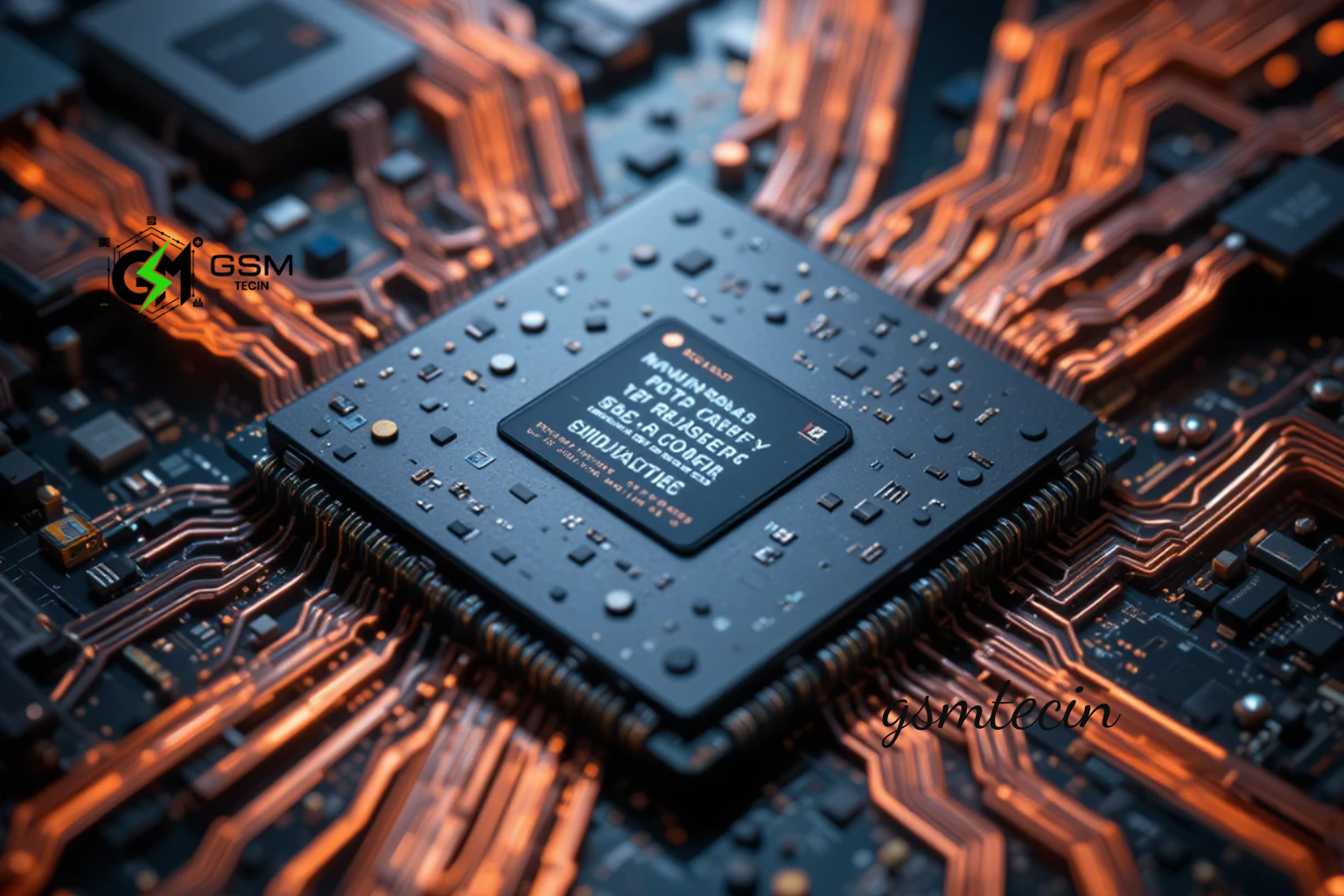
We have now reached a new and significant stage in the race for artificial intelligence hardware. NVIDIA has been the market leader in AI chips for a long time and has remained almost unchallenged. Its graphics processing units (GPUs) provide the computing power for nearly all major AI models. But the days of such dominance are numbered, and no one is daring or planning more strategically to carry out this challenge than Google. Google is putting together a layered game plan that fuses the making of custom chips, manufacturing partnerships, financial commitments, as well as software tools to encourage both in-house and external customers to use its Tensor Processing Units (TPUs).
The amount stuck has gone beyond imagination. Alphabet, the parent company of Google, is planning to spend $180 billion on capital expenditure in 2026, twice as much as the $90 billion spent last year and six times more than in four years. A large part of this expenditure is focused on taking the TPU ecosystem from a mere Google internal tool to a commercially competitive platform that can go toe-to-toe with NVIDIA on all major aspects.
Google’s TPU Strategy: From Internal Use to Commercial Ambition
Google’s tale of custom chips started quietly. The company developed its first TPU in 2016 to perform AI calculations more efficiently than general-purpose GPUs. In the background, Google Search, Photos, and Maps all ran on TPUs for years, giving Google an internal performance and cost edge that was largely unnoticed by the outside world.
That strategy has now been turned upside down. Google is now shipping its seventh-generation TPU, Ironwood, which brings a 10x performance improvement over its predecessor. The company has positioned the chip as the first TPU purpose-built for agentic AI workloads — the kind of complex, multi-step AI that is increasingly common in enterprise applications.
Taking a step back, Google has teased us with a peek at its eighth-generation architecture, consisting of a pair of purpose-built chips: TPU 8t for large-scale training, and TPU 8i for high-speed inference, both designed for TSMC’s 2-nanometer manufacturing process and should be generally available later in 2026. This is the first time Google has designed chips specifically for training and inference — a sign of increasing architectural sophistication, and a direct response to the specific demands of commercial AI workloads.
Borrowing NVIDIA’s Playbook: Financial Guarantees and Circular Financing
In my opinion, one of the most striking parts of Google’s latest changes isn’t the chips themselves, but rather how the tech giant is stirring up a market for them. Google is following a financing method that NVIDIA set up first, which involves using its corporate balance sheet to back infrastructure projects. Next, persuading them to use its hardware.
When it comes to the Lake Mariner AI data center cluster located in western New York, Google has thrown in financial support of $3.2 billion. The project is a joint venture between TeraWulf, the Google-backed cloud service provider FluidStack, and thousands of Google TPUs’s computing power is being channeled to Anthropic for its Claude AI models. Besides this, Google is also financially supporting a $7 billion Anthropic project, River Bend, in the Baton Rouge area of Louisiana, and providing $1.4 billion worth of guarantees for AI computing infrastructure in Colorado City, Texas.
Google is entering a new cloud services venture with Blackstone that will be valued at $5 billion, and will put the tech giant in direct competition with NVIDIA-backed platforms such as CoreWeave and Nebius.
This financial engineering – also known as “circular financing” – leverages the power of Google’s balance sheet to produce guaranteed demand for its TPUs. Google’s guarantee means cheaper debt for infrastructure developers. In return, those data centers will promise to use Google chips. It’s the same mechanism that NVIDIA used to lock its GPUs into the global data center market, and now Google is doing the same with similar resources and reach.
The Anthropic Partnership: Commercial Validation at Scale
Google’s growing partnership with Anthropic is arguably the single biggest relationship to legitimise its TPU platform as a viable commercial product. The first phase of their agreement was announced in October 2025, giving Anthropic access to up to one million TPUs and more than one gigawatt of compute capacity by 2026 — a deal worth tens of billions of dollars (announced in October 2025).
The second phase, formalised in April 2026, tripled that commitment to 3.5 gigawatts of next-generation TPU capacity, with Google’s total investment in Anthropic reaching $40 billion and a post-money valuation for Anthropic of $350 billion. By Pasquale Pillitteri
Anthropic’s annual revenue is over $30 billion, up from $9 billion at the end of 2025, and the company has more than 1,000 business customers, each paying over $1 million a year, double the number two months ago. For Google, this external anchor customer provides a commercial validation that internal deployment cannot: proof that leading AI companies are willing to bet their businesses on the TPU infrastructure.
A Multi-Partner Supply Chain and Direct Sales Push
Google has also reshaped its chip supply chain for maximum performance and cost competitiveness. Broadcom signed a multi-year agreement in April 2026 to supply TPUs and networking components through 2031, and is developing the next-gen TPU v8 training chip (codenamed “Sunfish”) for TSMC’s 2-nm process node for late 2027. Broadcom controls more than 70% of the custom AI accelerator market and is a key component in Google’s cluster architecture, providing optical interconnects for clusters of up to 9,216 accelerators. Separately, MediaTek is designing the cost-optimized inference version of the TPU v8, codenamed “Zebrafish,” which has components that are 20% to 30% cheaper than alternatives.
Some reports even say Google has ordered more than three million TPUs from Intel for 2028 and is also talking to Marvell Technology for more custom chip designs, which will be a step to make their production base more diversified.
In a big move to tap new markets outside of the Google Cloud platform, Google announced in May 2026 its intention to sell TPUs to enterprise customers directly for the first time and, at the same time,e released its first chip optimized for inference. Moneycheck
To get the ball rolling on software, Google has come up with TorchTPU, a program that makes it possible for AI developers using PyTorch to run their models on TPUs without having to change their existing source code completely. This effectively tackles the major obstacle to adoption of the NVIDIA CUDA ecosystem, which, over a period of nearly 20 years,s has been developed and fine-tuned extensively and for the developer community represents a major switching cost that is deeply embedded.
NVIDIA’s Position and the Broader Competitive Landscape
None of this means NVIDIA is facing an existential threat anytime soon. It will take years for the structural advantages of the CUDA ecosystem, the PyTorch integration, and the pace of product innovation from NVIDIA to meaningfully erode. NVIDIA continues to generate extraordinary revenue. NVIDIA generated $18.4 billion in data center revenue in one fiscal quarter, almost entirely driven by AI demand, and its Blackwell architecture continues to be in high demand across every major cloud provider.
But the overall trend is clear. TrendForce expects custom chip sales to grow by 45% in 2026, versus 16% growth in GPU shipments. The custom AI chip market is expected to reach $118 billion by 2033. Google, Amazon (with its Trainium chips), and Microsoft (with its Maia chip) are all scaling up custom silicon programs, while still buying NVIDIA GPUs. This creates a competitive dynamic that will slowly fragment the market.
This, in turn, leads to a more diverse AI infrastructure landscape over time, where Google’s TPUs, NVIDIA’s GPUs, and other custom accelerators sit side-by-side and compete for different workload types. This fragmentation creates meaningful pricing power and more optionality for enterprise AI customers and developers.
Frequently Asked Questions (FAQs)
What is a Google TPU, and how does it differ from an NVIDIA GPU?
TPU is short for Tensor Processing Unit, a specialised chip built for AI calculations. In contrast, NVIDIA GPU is a general-purpose processor that has been popular in AI workloads. TPUs are optimised for specific, high-volume inference workloads, and can be cheaper per token in those cases. However, NVIDIA GPUs remain more flexible thanks to the CUDA and PyTorch software ecosystem that allows a wider spectrum of AI development and experimentation.
Why is Google providing financial guarantees for data centers?
Google is using financial guarantees to build demand for its TPU chips, a strategy that NVIDIA has been using successfully for years. Google facilitates better debt financing for developers by co-investing in a data center project. And those facilities get Google’s hardware for the service. This “circular financing” model makes Google’s balance sheet a reliable pipeline for chip adoption.
What is the significance of the Anthropic deal for Google’s chip ambitions?
The Anthropic partnership matters because it proves Google’s TPUs can be used by third parties for commercial, enterprise-grade AI workloads. Anthropic’s rapid revenue growth – from $9 billion to more than $30 billion in a single year – and its promise for multi-gigawatt TPU capacity show that the top AI companies are ready to build their infrastructure on Google’s chips and not always default to NVIDIA.
Can Google realistically challenge NVIDIA’s dominance in AI chips?
In the near term, Google is unlikely to unseat NVIDIA for training workloads and general AI development, where the ecosystem advantage of CUDA remains decisive. But Google is establishing a large and growing position in AI inference at scale, with financial guarantees, multi-partner manufacturing, direct TPU sales, and anchor customers like Anthropic. The competitive delta is closing, especially in cost-sensitive, high-volume inference markets.