
The Unified Advantage: Why Connected Platforms Beat Fragmented Restaurant Tech
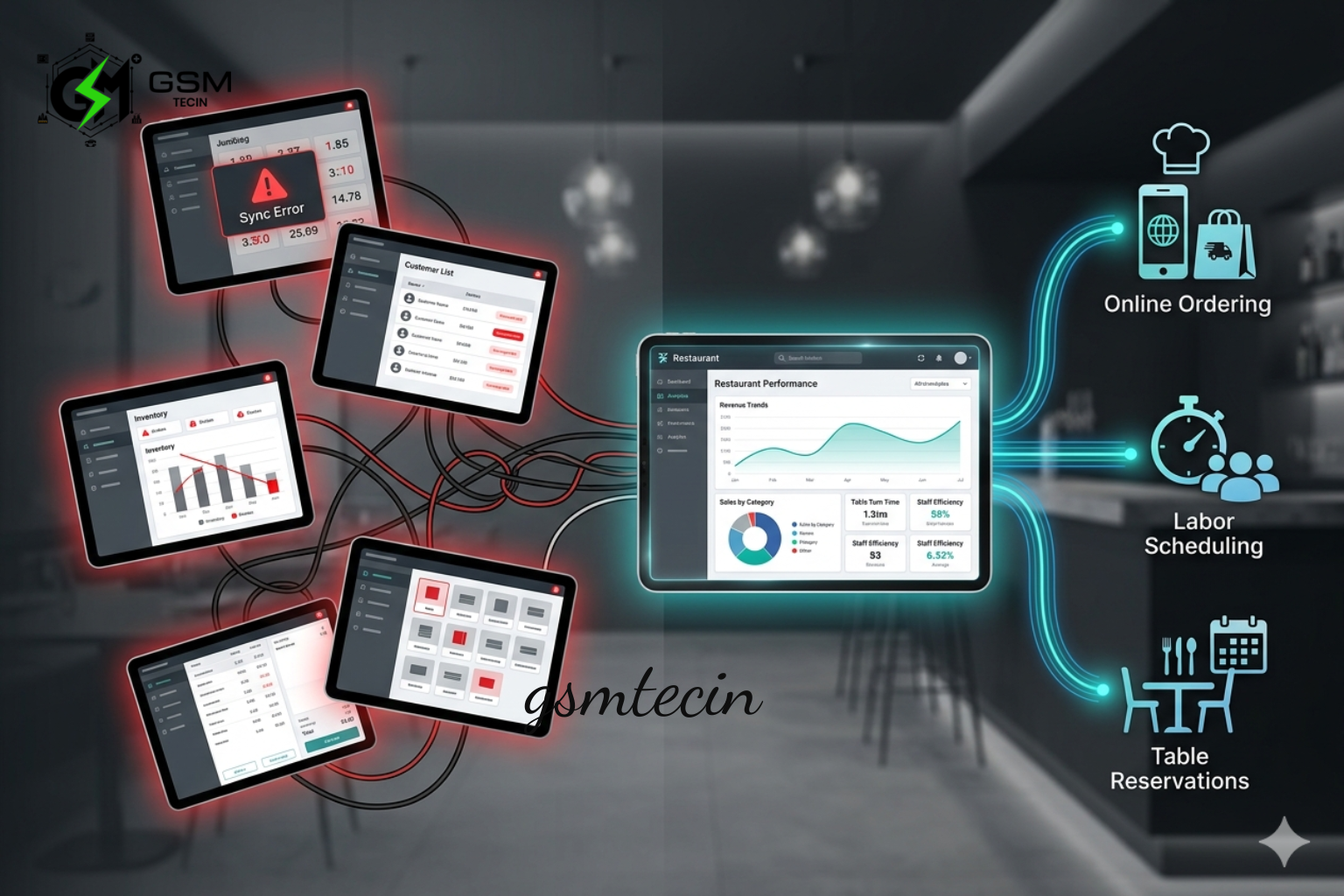
The restaurant industry is flooded with new AI and software options like never before. Many vendors say that simple, AI-powered, stand-alone solutions can, with no difficulty, optimize inventory, labor scheduling, and customer retention. The real problem arises when operators add these isolated applications to a disconnected foundation and This way unintentionally they create a digital frankenstacka patchwork of six to twelve separate apps which do not communicate with one another.
Though the demos of standalone AI features impress, in the end, they present their true colors in a real-world environment when they operate within a data silo. Efficiency at its best is not about installing more software but having one POS platform that links every operational touchpoint with a shared data layer. SpotOn and similar platforms are at the forefront of this movement, demonstrating that a solid, unified operational foundation consistently leads to better results than fragmented, AI-heavy competitors in the metrics that count most: revenue, labor efficiency, and profit margins.
The Hidden Costs of a “Frankenstack”
Combining different applications for POS, online ordering reservations labor scheduling, and inventory results in considerable visible and invisible drains on a business:
Visible Costs: Operators are suffering from rising subscription fees for multiple platforms, heavy administrative burden due to manual data transfer between systems, and human errors are also inevitable. Managers are spending their time sorting out data from multiple dashboards instead of supervising their teams on the floor.
Invisible Costs (Data Silos): When main tools are apart, decision-making at a strategic level is a problem. For instance, suppose a reservation system indicates 200 covers are booked for a Friday night but the data cannot be shared with the labor scheduling app, the restaurant may be severely understaffed That means the guest experience is harmedor overstaffed, which wound labor costs.
The AI Flaw: Putting standalone AI tools on top of a broken, fragmented system is the same as “garbage in, garbage out.” An AI tool will not be able to optimise inventory correctly if it is based on a delayed nightly sync rather than on-the-spot sales data. It is making suggestions with algorithmic trust based on fundamentally incomplete information.
Defining a Truly Unified POS System
A unified system is a fundamentally different beast than a standard POS with third party integrations. Integrations are digital bridges between two completely different platforms. They can be slow, out of sync, or break altogether.
Conversely, a unified system is designed from the ground up with a single shared data layer. Each module – payments, online ordering, front-of-house reservations, labour management and marketing – taps into the same pool of real-time data and adds to that pool.
Tech Configuration Comparison
| Configuration | The Advantages (Pros) | The Trade-offs (Cons) |
| The Niche “Frankenstack” | Quick to deploy; highly effective at solving one specific, isolated operational problem. | Creates complex data silos; increases daily operational friction; lacks total business context. |
| The Unified Ecosystem | Establishes a single source of data; drastically streamlines workflows; unlocks deep, site-wide business insights. | May require more extensive configuration upfront; requires a long-term commitment to a single vendor. |
How SpotOn Connects the Dots
SpotOn replaces the chaos of multiple vendors with an infrastructure that is designed to work the way restaurants work. SpotOn doesn’t see AI as an ornamental feature, but instead builds functional machine-learning capabilities into its core architecture (e.g., SpotOn Profit AI and AI Menu Assistant). This provides the technology with the complete business context it needs to provide actionable insights.
1. One Dashboard, Total Visibility
Owners can track sales performance, labour costs, menu margins and guest trends from a single screen instead of toggling between disparate platforms. For example, a restaurant owner sees that a certain item on the menu tends to sell especially well during happy hour. They can coach their staff to cross-sell that item in real-time, instead of finding out about the trend weeks later in a spreadsheet.
2. Payments as a Data Engine
SpotOn processes every transaction, providing real-time updates to inventory tracking, guest loyalty profiles and financial reporting. With this flow happening in real time, operators can calculate accurate customer lifetime values and evaluate menu engineering based on actual margin contributions—not guesswork.
3. Commission-Free Online Ordering
Third-party delivery platforms often take steep commissions of 15% to 30%, which destroy tight restaurant margins. SpotOn’s integrated online ordering solution sends digital orders directly into the kitchen POS, with no commission fees. The biggest benefit is that the restaurant can keep 100% of the customer data and use it to power future marketing campaigns.
4. Seamless Guest Intelligence & Reservations
SpotOn Reserve links the front-of-house host stand directly to kitchen operations. Hosts can see turn times and server workloads in real time. Once a high-value loyalty member checks in, the system automatically alerts the server about the customer’s dietary restrictions and previous order history, so the server knows this before they even get to the table.
5. Smart Labor Management
SpotOn Teamwork helps you to schedule and manage your employees’ tips based on past POS sales history and currently running reservation data directly. Thanks to this coordination, managers are able to create efficient scheduling that precisely corresponds staff numbers with real customer demand.
The Core Metrics That Matter
A restaurant’s technology should help it directly increase its profits. Integrated systems Mainly aim at enhancing five key industry performance indicators:
Revenue Per Available Seat Hour (RevPASH): It is increased by better planning the flow of reservations, effectively managing the time to turn tables, and using real-time data to suggest profitable upsells.
Food Cost Percentage: It is maintained by comparing the inventory being used at the moment with sales made, thereby revealing any inconsistencies caused by waste, theft, or variations in serving sizes.
Labor Cost Percentage: Operators lower this expense by building staff schedules around detailed, data-driven revenue predictions rather than relying on a manager’s intuition.
Customer Lifetime Value: It is improved by associating loyalty incentives with customers’ purchase histories in the POS system, which makes marketing campaigns highly personalized and automated.
Online Order Revenue Share: Operators increase this metric by encouraging customers to order directly from the restaurant’s commission-free website rather than using third-party delivery apps that take a large share of the margin.
Conclusion: Cohesion Always Wins
The true worth of a technology cannot simply be gauged by the size of a vendor’s feature list or the impressiveness of an AI product demo. Actually, those operators who create a clear, unified operational foundation are the ones who will be successful. Once every software tool is able to communicate perfectly with each one of these other tools, data is able to become useful, the headaches experienced from administration are eliminated, and the staff can be able to function at their peak efficiency. By integrating labor loyalty payments, and analytics into one single untied engine, SpotOn delivers the clear structural advantage that is essential for independent and multi-unit restaurants to prosper.
Frequently Asked Questions
What is the primary difference between an “integrated” POS and a “unified” POS?
An integrated POS links to distinct, external software applications via digital bridges (APIs). Most of the time, these kinds of links lag, have sync issues, or break completely. A unified POS is designed on a single, shared data layer from the very beginning, so every function like scheduling, online ordering, and reservations is naturally working off the exact, real-time information shared by everyone.
Why are standalone AI tools less effective for restaurants?
Standalone AI tools work on the principle that the quality of output depends on the quality of input. Since they are merely surfaced on top of scattered systems, they do not have a comprehensive understanding of the overall operational context. For instance, if an AI scheduling tool does not have access to the reservation book or live sales history data, it will not be able to optimise labor scheduling effectively.
How does a unified POS platform reduce overhead costs?
A unified platform reduces overhead in two primary ways:
- Directly: It eliminates the multiple SaaS subscription fees associated with managing a “frankenstack” of 6 to 12 different apps.
- Operationally: It minimizes costly human errors, reduces hours spent on manual data entry, and cuts out the 15% to 30% commissions charged by third-party delivery apps via built-in, direct online ordering.
Can a unified platform actually improve the guest experience on a busy night?
In fact. Since reservation systems at the front-of-house share data with the POS, hosts can access real-time, live table turn times and server workloads, which leads to shorter and more reasonable wait times. In addition, guests’ preferences and loyalty rewards immediately appear on servers’ handhelds, allowing staff to maintain smooth, personalized service even during an intense dinner rush.