

Orbital-1: The Mission to Put AI Computing in Space
A Los Angeles startup is preparing to launch a satellite data center in April 2027 — and the outcome could reshape how the world thinks about AI infrastructure.
The Problem: Earth Is Running Out of Power for AI
Artificial intelligence is growing faster than the power grid can handle. With every new frontier model released, with every new enterprise launching an AI assistant, the demand for compute infrastructure ticks up. That demand, behind the scenes, translates straight into electricity. And the electricity is getting harder to find.
The International Energy Agency estimates that the power consumption of data centres worldwide will rise by more than half to 945 terawatt-hours by 2030, almost equal to Japan’s total electricity consumption for a year. Grid operators in the US are already struggling to keep up with data centre expansion plans. Land, water for cooling, building permits are all becoming a serious constriction. For much of the industry, the answer is to move to a better spot on the planet — a colder climate, a cheaper grid, a less-regulated jurisdiction.
That approach misses the point for Orbital founder and CEO Euwyn Poon. The ceiling is not geographical. It’s structural. And his answer is to get off the planet entirely.
Who Is Orbital?
Los Angeles startup Orbital is constructing AI data centers to run in low Earth orbit. The company graduated from Andreessen Horowitz’s Speedrun accelerator with support from a16z and a slew of venture firms, such as Basis Set, Human Element, Wayfinder, Antler and more. The team’s latest $5 million pre-seed round was oversubscribed, an indication investors see something distinct in their approach, even as better-funded rivals chase the same territory.
Poon is not your typical aerospace founder. He previously founded e-scooter company Spin, which was bought by Ford for an estimated $100 million and where he put hundreds of thousands of small electric vehicles into service in more than 100 cities. That background – supply chain execution, hardware manufacturing at scale, building physical infrastructure in a regulated environment – is probably more relevant to what Orbital is trying to do than a typical space industry resume.
“The grid is limiting AI progress,” Poon said. “Power and cooling drive the economics of data centers, and both are getting harder. “In orbit, you have constant solar power, and the cooling is very different.
The Mission: Orbital-1, April 2027
Orbital-1, the first satellite from Orbital, will be launched on a SpaceX Falcon 9 rocket in April 2027. The company has carefully parked the project for checking the work, not a business service. The questions that it intends to address are purely of engineering nature: Is it possible for a GPU to maintain its performance while being exposed to radiation for a long time? Is it possible to control the heat from the system effectively without using convection cooling? Can AI inference tasks be done from space reliably with an acceptable level of delay?
Each satellite is equipped with several NVIDIA Space-1 Vera Rubin GPUs, which are powered by solar panels and cooled through radiation of heat into the vacuum of space. If the test mission is successful, Orbital is planning to shift towards commercial sales of AI inference and start the regulatory procedure for the deployment of a full satellite constellation with the FCC.
Based on Poon, the route from verification to income is quite simple: first, show that the hardware is functioning; then, sell inference compute to AI model providers and enterprises. Business-wise, he sees the conversion of solar energy directly into AI tokens which are the units of output that language models generate followed by selling those tokens to clients who require compute capabilities but are indifferent to the physical location of the operation.
The Hardware: NVIDIA’s Space-1 Vera Rubin Module
NVIDIA unveiled the Space-1 Vera Rubin Module during its GTC 2026 conference in San Jose. Orbital-1 runs on this chip, which represents the most powerful GPU system ever designed for orbital deployment. It delivers up to 25 times more AI computing power for space-based inference than the H100, the previous benchmark chip for space applications.
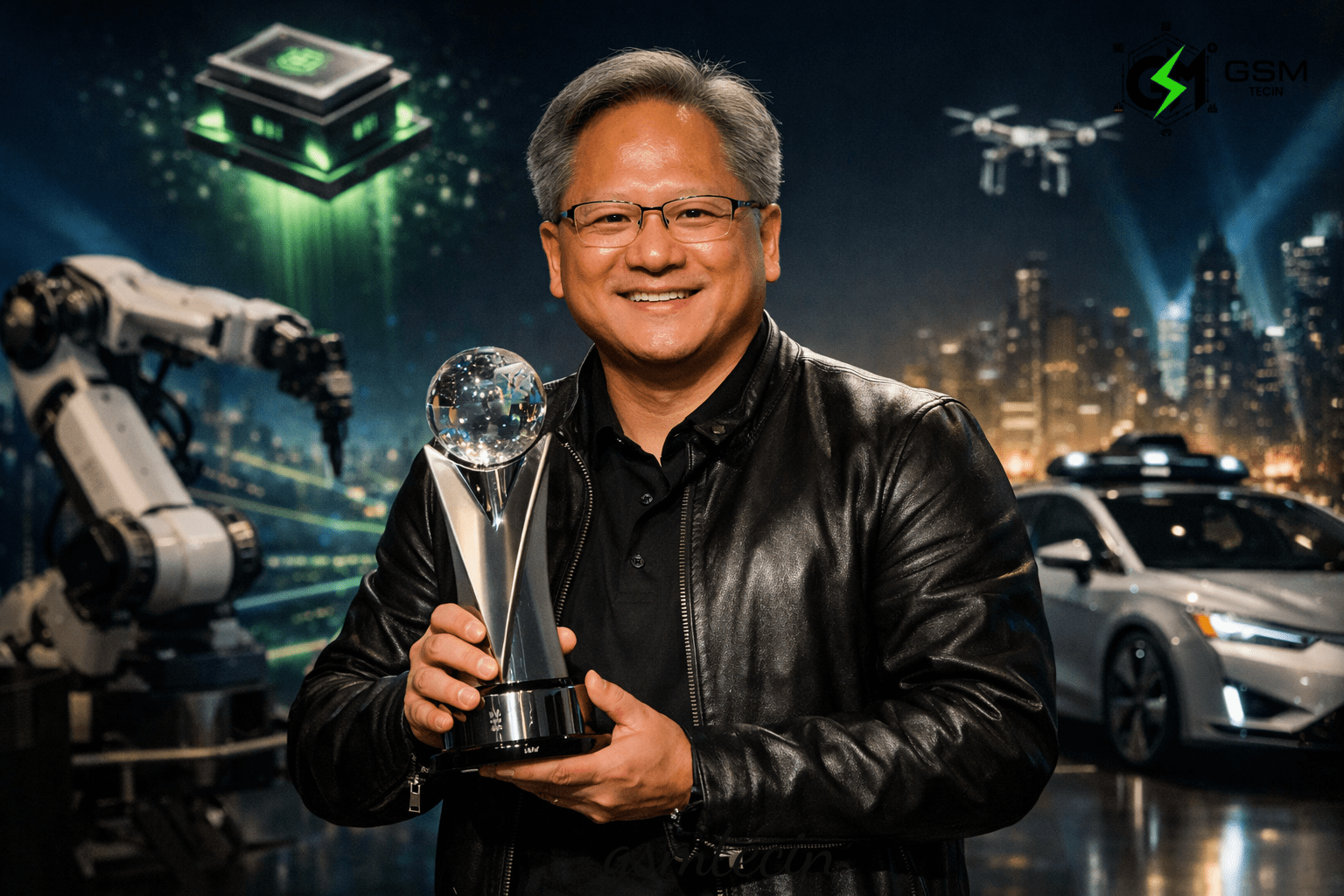
NVIDIA CEO Jensen Huang made the statement with his usual excitement: “Space computing, the final frontier, has arrived. When we deploy satellite constellations and explore deeper into space, intelligence must live wherever data is generated.” He also pointed out the main architectural challenge related to running powerful chips in orbit: “In space, there’s no conduction. There’s no convection. There’s just radiation and so we have to figure out how to cool these systems out in space.”
The Vera Rubin Module is the peak of a three-tier stack that NVIDIA has put together for space. Under it are the IGX Thor for mission-critical edge environments and the Jetson Orin for smaller satellites performing vision and navigation. Among the partners who have confirmed using NVIDIA’s space computing platforms are Aetherflux, Axiom Space, Kepler Communications, Planet Labs, Sophia Space, and Starcloud.
Why Inference, Not Training
The main focus of Orbital’s plan is inference, not training. Training a state-of-the-art AI model requires thousands of GPUs connected through ultra-low-latency networks. Satellites orbiting hundreds of kilometers apart cannot provide the tight communication links that AI training demands. Inference works differently. Individual requests operate independently, allowing operators to route them to separate compute nodes, process them in parallel, and return the results to Earth. This distributed approach makes space-based inference far more practical than space-based AI training.
At 500 to 600 km higher, a round-trip latency will be between 20 and 40 ms – which is still very acceptable for many AI tasks such as document analysis summarization image generation, and background processing. Real-time conversational AI Though depends on ground-based infrastructure, but a significant and increasing part of AI computing requirements is latency-tolerant enough to be executed from orbit.
The Satellite Design and Long-Term Vision
Orbital’s satellites are intended to be about the size of a refrigerator with solar panels the size of tennis courts that can produce about 100 kilowatts of electricity for each one. The satellites will be linked to each other through optical inter-satellite communication. The size is intentionally small when compared to competitors who have envisioned structures as large as football fields. Typically, larger structures in space are seen as pipe dreams due to maintenance, physics, and cost of having robots constructing such things in space, Poon said.
Orbital’s approach is to scale by quantity. They want to have production satellites of 100 kW each, and ultimately a constellation consisting of over 100,000 satellites delivering more than 10 gigawatts of orbital computing. Factory-1, Orbital’s R&D and manufacturing center is located in the South Bay area of Los Angeles. The company is laying down the processes at the Factory-1 that will make it possible to produce the quantity of satellites the space industry has never even dreamed of trying.
A Crowded Race, but a Real One
Orbital will be entering a competition. SpaceX has shown its AI1 satellite design a huge structure with a 70-meter wingspan, aimed at 150 kilowatts of peak compute and has requested the FCC to authorize up to one million AI satellites. Google’s Project Suncatcher is investigating orbital computing through a partnership with Planet Labs. Starcloud already has a GPU in orbit. The competition is real, and well-financed.
Orbital Though is different because it has a distributed, small-satellite architecture and focuses on a manufacturing-first mentality. Instead of building fewer, larger and more complex spacecraft, it is relying on the same principle that made Starlink viable: volume, standardization, and iterative improvement.
Frequently Asked Questions
What is Orbital-1?
Orbital-1, launching in April 2027, is the first satellite Orbital, a start-up based in Los Angeles, is sending into space. Riding on a SpaceX Falcon 9 rocket, it will have some NVIDIA Space-1 Vera Rubin GPUs on board and will try to perform AI inference operations from a low Earth orbit.
What is the NVIDIA Space-1 Vera Rubin Module?
It is a GPU system by NVIDIA aimed at data centers in orbit, which was introduced during GTC 2026. Space-1 Vera Rubin packs up to 25 times more AI power for space-based inference than the H100, besides it being very suitable for size, weight, and power for satellite environments.
Why is Orbital concentration only on inference and not AI training?
Training large AI models requires many GPUs located close together with extremely low latency. Satellites separated by hundreds of kilometers cannot support this architecture efficiently. In contrast, inference requests operate independently, allowing a distributed constellation to handle them effectively. This makes orbital deployment far more suitable for inference workloads than for training large AI models.
How does cooling work in space?
In the absence of air or water, satellites dispose of their heat through radiation – they emit heat in form of infrared energy straight into the cold vacuum of space. While it is the main difficulty of these systems thermally that there is no air or water for cooling, it is also their main advantage in the sense that, unlike terrestrial data centers, they have unlimited capacity for passive cooling.