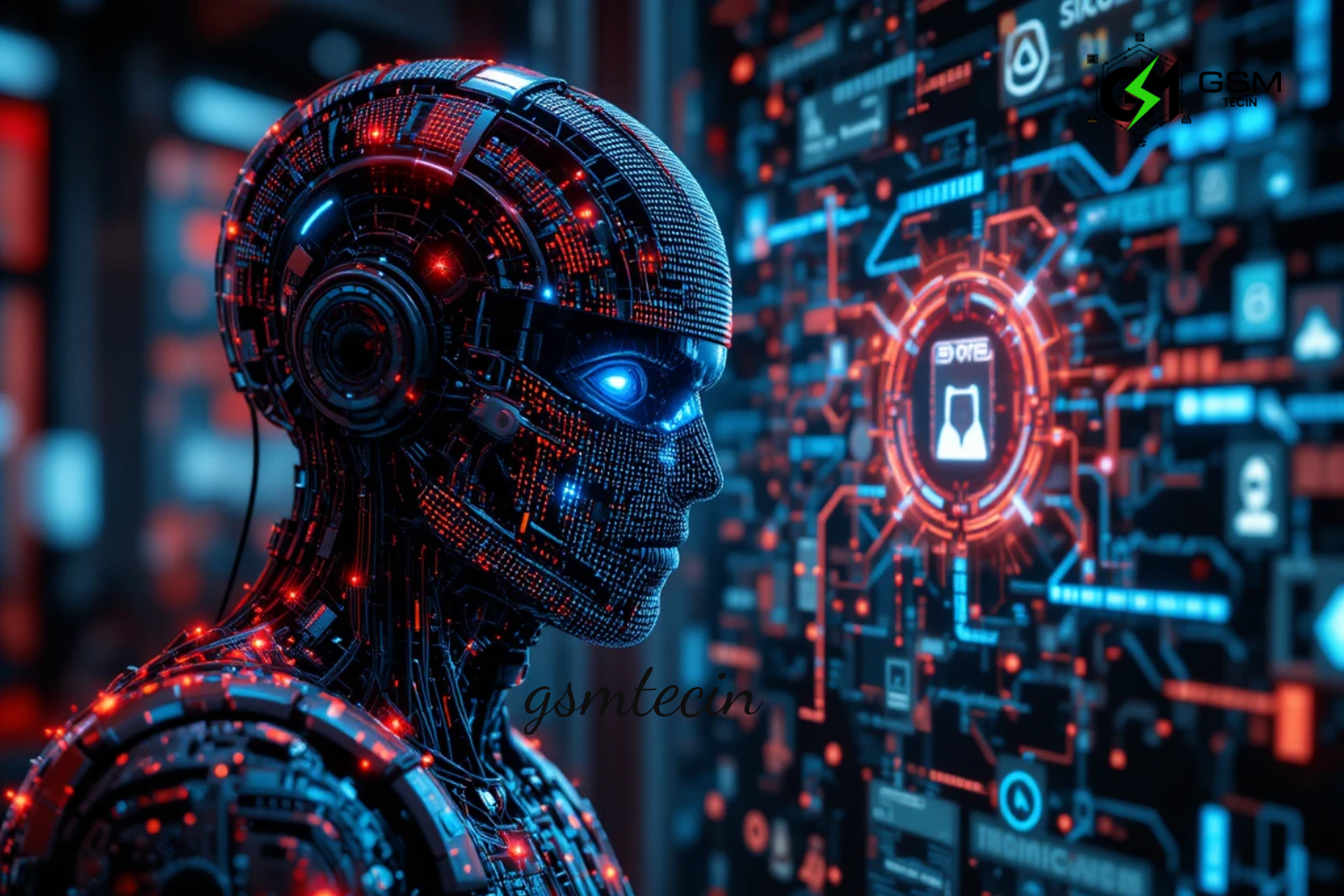
By 2026, artificial intelligence is no longer a supplementary feature of cybersecurity — it’s its operational backbone. AI has transformed the threat landscape: hackers are leveraging it to automate reconnaissance, craft personalised phishing emails en masse, develop adaptive malware that mutates to evade detection, and conduct autonomous intrusion campaigns without human intervention. To face these threats, we need a response that’s smart and fast in equal measure. Traditional rule-based security tools are designed to identify known threats and block them. Structurally, they can’t keep up.
The basic insight into the move to AI-powered defence is elegantly simple: instead of asking “Do I recognise this threat?” the system asks “Does this behaviour fit the way things normally work here?” That one change in logic flips the effectiveness of security operations, allowing organisations to catch zero-day exploits, insider threats, and new attack techniques that leave no signature trail — the kinds of things traditional tools simply can’t deal with.
Key Themes and Findings
1. Why Traditional Defences Don’t Work
Rule-based security tools rely on static lists of known threats. When a breach is masked as legitimate activity by an attacker — logging in as a real employee with stolen credentials — the system sees a valid login and raises no alarm. There is no rule for “this person is logging in at 2 AM from a country they have never visited before and downloading files that they have never accessed.” This kind of anomaly is exactly what AI is designed to detect. It creates a model of normal behaviour and alerts on deviations, rather than a list.
2. How AI-Powered Detection Actually Works
AI security programs learn from huge amounts of telemetry – such as network traffic, authentication logs, user activities, etc. Gradually, they are able to identify subtle details of what “normal” is within a particular company. Three features make them very effective in real life:
Entire network visibility: AI keeps an eye on data flowing all over the environment at once and can identify signs of breaches like unusual data moves or devices talking to unknown servers.
Pattern connection: Hackers can stay hidden for weeks by doing very little each time. Alone, each one seems harmless. AI is capable of linking twenty very quiet signals from different systems over a time of several weeks and identifying them as a threat.
Fastness: One human security expert can cross-check several hundreds of alerts a day. AI Though can judge millions of incidents during the same time – such a difference is why whether a security attack is detected when it is still in progress or after it has been carried out.
3. The Rise of Agentic AI
But the biggest story of 2026 will be the rise of agentic AI — machines that think through multistep problems, gather context, and perform tasks without a human telling them what to do at every step. In the Security Operations Center, agentic AI agents autonomously log in to log systems, query threat intelligence platforms, and write investigation reports for analysts to review. This moves the human role from manually triaging alerts to making high level judgements and remediation decisions – a far more effective use of skilled security professionals.
4. AI as Both Shield and Sword
The defining reality of AI-powered cybersecurity in 2026 is that the same capabilities that are empowering defenders are equally available to attackers. Generative AI allows threat actors to create highly personalised phishing emails that are grammatically correct and reference actual colleagues and ongoing business projects. Deepfakes of voice and video can be so convincing that attackers can impersonate executives on phone calls and approve fraudulent transactions. Agentic malware observes its environment, identifies the weakest path through a network, and continuously adapts its behavior to evade detection in real time, creating a threat that overwhelms most enterprise security stacks.
5. The Human-AI Partnership
While AI has its capabilities, it does not replace human security expertise. It is a force enhancer. AI is very good at combing through vast amounts of data, finding subtle statistical patterns and reacting at machine speed. Humans are good at contextual reasoning, ethical judgement, and understanding the business implications of security decisions. 2026’s best security ops use both. The gap is clear in industry data: 77 percent of organizations use AI in their security stack, while only 14 percent trust AI to execute fully autonomous remediation actions without human intervention. Most maintain a human-approval model, and that balance is right.
The point of AI in security is not to hand everything over to a machine and walk away. The point is to catch problems early — while they are still small, before real harm is done. Early versus late: that difference is what actually matters.
6. Critical Risks and Honest Limitations
AI security is not infallible. Organizations must be clear-eyed about its genuine limitations:
False alarms: A system that is set to be highly sensitive will generate a lot of false positives. The security teams become tired when they keep spending too much time investigating alerts that are finally harmless. And tired teams miss the real threats.
Adversarial manipulation: Attackers with a high level of expertise often get to know the ways of AI learning. They feed the system with gradually misleading signals so that the system changes its concept of “normal”. As a result, they manage to work within the distorted baseline without being detected.
Data dependency: The reliability of AI systems depends on the quality of the data on which they are trained. A lack of logging or telemetry that is of poor quality results in models that are not only missing threats but also producing too much noise.
Shadow AI: When employees use consumer AI tools to process sensitive business data without IT’s knowledge, they expose the organization to risks that perimeter security cannot adequately protect against.
7. A Practical Roadmap for Security Leaders
For organizations navigating this transition, four strategic priorities stand out:
First, improve basic hygiene. AI will only enhance the security program’s quality if it is initially of good quality. A program built on weak foundations is not something that AI can come to the rescue of. Asset inventory, patch management, and comprehensive logging are not optional extras but prerequisites.
Ensure everything is on a few integrated platforms. The fragmented point solutions create gaps of visibility that hamper the effectiveness of AI. Unified platforms that deliver correlated telemetry across endpoints identity cloud, and network provide the data quality AI needs.
Treat AI agents as first-class security assets. Every AI agent operating within the enterprise should have a clearly defined identity, a carefully scoped permission set, and continuous behavioral monitoring. Without these safeguards, organizations create privileged actors that can act without accountability or oversight.
Educate the whole security team about AI. Security personnel who have a solid knowledge of machine learning models their strengths and weaknesses are much more capable of using these tools efficiently and also of identifying the situations when human intervention is necessary.
Frequently Asked Questions
Q1. What is the fundamental difference between traditional cybersecurity tools and AI-powered security?
Legacy methods rely on predefined lists of identified threats. They only prevent recognized ones and let everything else in. AI-based security methods take the opposite approach: they establish a baseline of normal behavior within a company and flag anomalies, including threats they have never previously encountered. This behavioral reasoning is the feature that allows AI to identify zero-day exploits, insider threats, and new attack methods that rule-based tools completely overlook.
Q2. Does AI in cybersecurity replace human security analysts?
No, and any vendor claiming otherwise should be treated with significant skepticism. AI handles the volume — processing millions of events, correlating patterns, and triaging alerts at machine speed. Human analysts handle the judgment — understanding business context, making complex remediation decisions, and applying ethical reasoning to ambiguous situations. The most effective security operations in 2026 deliberately combine both. Only 14 percent of organizations currently allow AI to take fully autonomous remediation actions; the vast majority maintain human approval in the loop, and that is the correct approach.
Q3. How are attackers using AI, and why does that matter for defenders?
Attackers are applying AI to make their attacks faster, more convincing, and harder to detect. Generative AI enables the mass production of hyper-personalized phishing emails that reference real colleagues and ongoing projects. Voice and video deepfakes allow threat actors to impersonate executives convincingly enough to authorize fraudulent wire transfers. Agentic malware can observe its target environment and modify its own behavior in real time to evade detection. This dual-use reality means that organizations cannot treat AI as purely a defensive technology—they must recognize how cybercriminals leverage AI to target them and adapt their defenses accordingly.